From promise to proof: the EU’s new rules raise the bar on environmental claims
Since 2024 the European Union has raised the bar on environmental claims, across advertising, brand and product names, packaging and labels. For organisations doing genuine work, this is welcome news. Here is what has changed, and how to communicate well now that proof has become the standard.
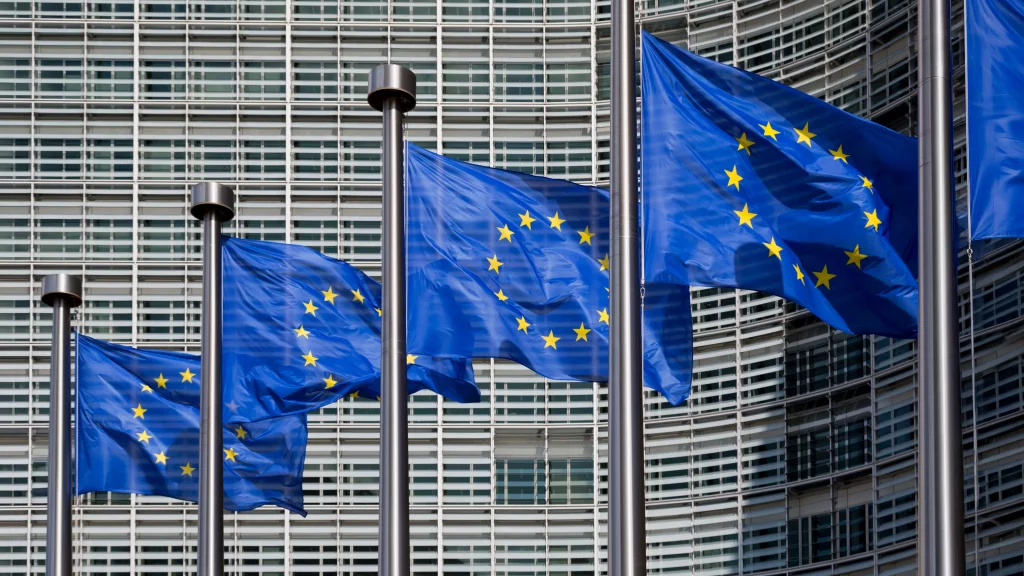
For years, environmental communication was a comfortable space. A few images of nature, a green palette, words like “responsible”, “sustainable” or “committed”, and an organisation could build a positive perception, often well ahead of what its practices justified. Brussels is closing that space.The scale of the problem explains the response. A European Commission study that reviewed 150 sample claims found that 53% gave vague, misleading or unfounded information, and 40% were unsubstantiated (Norton Rose Fulbright). When more than half of all green messaging fails a basic test of honesty, the credibility of every claim suffers, including the credible ones. The new rules respond to that erosion and reshape the standard for an entire field. They concern committed organisations as much as the companies they hold to account.
A tightening spread across several texts, not one big law
One misconception is worth clearing up first. Since 2024 the EU has not passed a single, sweeping law on green claims. The text that would have played that role, the proposed Green Claims Directive, is precisely the one that stalled. The Commission announced its intention to withdraw it in June 2025 and the negotiations were suspended. The proposal was not formally withdrawn and its future remains uncertain (Latham & Watkins).
The tightening has come instead through several texts and layers working together: a core consumer-protection directive, its implementing rules and guidance, a new packaging regulation, a directive on the right to repair, and reinforced national enforcement. One file slowed down. The direction did not.
The core rulebook: the EmpCo directive
The centre of gravity is Directive (EU) 2024/825, known as “Empowering Consumers for the Green Transition” and often shortened to EmpCo or ECGT, adopted on 28 February 2024 (eur-lex.europa.eu). It amends two pillars of EU consumer law, the Unfair Commercial Practices Directive and the Consumer Rights Directive, folding a list of greenwashing practices into the rules that already govern misleading advertising. Member States must transpose it by 27 March 2026, and the rules apply from 27 September 2026 (European Commission).

In practice, it turns several common practices into automatically unfair ones. It restricts or bans:
- generic environmental claims such as “eco-friendly”, “green” or “climate friendly” when the organisation cannot demonstrate recognised, excellent environmental performance;
- claims presenting a whole product or organisation as virtuous when only one aspect of it is, for example a claim that rests entirely on the packaging;
- carbon or climate neutrality claims for a product when they rest on the offsetting of greenhouse gas emissions rather than on real reductions;
- sustainability labels that are not based on a certification scheme or established by a public authority;
- claims about future environmental performance, such as a neutrality target for a given year, unless they rely on clear, public and verifiable commitments, a detailed implementation plan, and independent verification.
A few concrete shifts make this tangible. A product marketed as “climate neutral” on the basis of purchased offsets can no longer carry that label; the honest version states the reduction actually achieved, and over what scope. A self-designed green leaf stamped on a pack, with no scheme behind it, no longer passes; only labels grounded in a certification scheme or a public authority do. And “eco-friendly”, used alone, gives way to a specific, verifiable attribute, such as a stated share of recycled material backed by evidence.
The same directive also strengthens what organisations must tell consumers about durability and reparability, and it introduces a harmonised label for commercial guarantees, so that comparable promises are presented in a comparable way.
The 2025 clarifications that widen the net
Two developments in 2025 made the rules sharper and harder to sidestep. In September 2025, the Commission adopted implementing rules standardising how guarantee and durability information is presented to consumers. Then, in November 2025, it published a detailed Questions and Answers guidance on how the directive applies in practice (Covington).
Two points in that guidance matter directly for communication. First, the rules can reach brand names and product names themselves, not only slogans and campaign lines. A name that implies an environmental benefit without robust evidence behind it is exposed. Second, there will be no further transition period: environmental claims and packaging already in circulation must comply from 27 September 2026, with no grace window for existing stock.
For anyone building a brand or a campaign, this changes the brief. Substantiation is no longer a legal afterthought added once the concept is signed off. It belongs at the start, when names, claims and visuals are chosen.
The product itself is now in scope: packaging and repair
The pressure also moved onto the physical product. The Packaging and Packaging Waste Regulation, Regulation (EU) 2025/40, entered into force in February 2025 and applies from 12 August 2026 (European Commission). It harmonises packaging labelling across the EU and limits the green messaging a pack can carry, so that what appears on it is standardised and substantiated rather than decorative. Compostable packaging, for instance, must state clearly that it is compostable, not suitable for home composting, and not to be discarded in nature (Fieldfisher).
In parallel, the Right to Repair Directive, which Member States must transpose by 31 July 2026, sets expectations around reparability and the claims organisations make about it. Alongside these, the EU’s ecodesign rules introduce a digital product passport that will carry verified information about a product. Taken together, the message is consistent. Whether a claim appears in an advertisement, in a product name, or on a box, it now needs to hold up.
Enforcement is already here, and Belgium is no exception
These rules do not arrive on empty ground. National regulators and courts have been moving for some time. In June 2024, the German Federal Court of Justice ruled that environmental claims must meet standards close to those applied to health advertising, given how heavily they now weigh on purchasing decisions (Sidley Austin).Belgium has its own framework. Misleading environmental claims already count as an unfair commercial practice, and the federal economy authority recalls that they can be sanctioned with fines reaching 80,000 euros, before the statutory surcharges that apply (SPF Économie). Advertising is watched too: the Jury d’Éthique Publicitaire reviews environmental claims against a code for ecological advertising. And the picture on the ground is well documented. A 2023 analysis of nearly 13,000 advertisements on French-speaking Belgian media found that 39% of environmental claims carried a risk of greenwashing, with banks and construction companies the most exposed, at 96% and 84% respectively (Conseil de la Publicité).
The real shift: from a market of claims to a market of proof
For genuinely committed organisations, all of this is good news, even if it rarely feels that way at first.
For two decades, the vocabulary of environmental commitment worked as a shortcut. Anyone could sound responsible, which meant that doing the real work earned little distinctive credit. Greenwashing misled the public. It also devalued the voice of organisations that had something true to say, by drowning it in a background hum of green adjectives. By raising the cost of empty claims, this body of rules restores value to the ones built on evidence.
This connects to a deeper dynamic we see across the causes we support. A large share of the public still backs environmental and social action, but trust in the messengers has thinned. Part of that erosion comes from the accumulated weight of promises that turned out to be decoration. A framework that separates proof from posture is, in the end, an ally of every organisation that has nothing to hide.
The greenhushing trap
There is a tempting but mistaken response. Faced with legal risk and public scrutiny, some organisations are starting to say less, to soften their environmental messages or drop them altogether. This reflex has a name, greenhushing, and it is its own form of failure.
The Belgian data shows it happening. The follow-up study found the share of advertisements at risk of greenwashing falling from 39% to 27%, a real improvement. But over the same period, the share of advertisements making any environmental claim at all fell from 9.2% to 7.8%, which the authors read as a possible sign of greenhushing (RMB). In other words, some organisations are not cleaning up their claims. They are simply going quiet.
Silence cedes the field. It deprives the public of the examples that make change feel credible, and it hands attention back to the loudest and least scrupulous voices. Stricter rules are an invitation to become precise, not to lower the volume.
Our view: get precise, stay human
The change these rules demand is a change of register. Environmental communication moves from a logic of declaration to a logic of demonstration. An organisation can no longer simply state that it acts for the planet. It needs to show what it changes, at what scale, with which indicators, over what timeframe, and with which limits openly acknowledged.
This has three practical consequences we work on with the organisations we support.
First, credibility now depends on the coherence of the whole organisation, not on the communication team alone. A campaign holds only when procurement, operations, partnerships and governance tell the same story. Committed communication can no longer be produced in a silo.
Second, transparency content stops being an annex. Impact reports and the pages that document an organisation’s trajectory used to sit quietly at the bottom of a website. They become strategic assets, because a claim in an advertisement now sends people looking for what stands behind it.
Third, precision is not dryness. The risk, in moving towards proof, is to produce communication that is accurate and forgettable. Evidence still has to be made desirable and legible. This is the work of a communication agency committed to positive impact: turning a verified trajectory into a story that reaches people, without overstating a single fact.
What this means in practice
For organisations preparing for September 2026, four moves matter more than the rest.
- Review every environmental claim you currently make, in campaigns, on packaging, on the website, and in product and brand names. Sort them into claims you can prove, claims you must qualify, and claims you should retire.
- Build the evidence layer behind each claim you keep: the data, the scope, the methodology, the certification, the third party where one is required.
- Bring substantiation into the brief from the start. Choosing a name, a slogan or a visual without checking what supports it is now a risk, not a shortcut.
- Make the proof desirable. A verified figure or a documented trajectory only changes minds if it is clear, well told and easy to find.
Our role
We read this wave of regulation less as a constraint than as a clarification. It marks the end of a period when communication could float free of what an organisation actually does. The organisations that come out stronger will be those that stop treating commitment as an image to project, and start treating it as a reality to demonstrate.
The real question is no longer how to talk about your environmental commitments. It is how to build an organisation coherent enough that its committed communication stops sounding like a promise and starts reading as proof.
That is the work we do at MOJO Agency, and we are ready to help you do it.
Sources
- Directive (EU) 2024/825, Empowering Consumers for the Green Transition (EmpCo), 28 February 2024: https://eur-lex.europa.eu/eli/dir/2024/825/oj/eng
- European Commission, sustainable consumption and consumer rights: https://commission.europa.eu/topics/consumers/consumer-rights-and-complaints/sustainable-consumption_en
- Commission guidance (Q&A, November 2025) and implementing rules (September 2025), analysis: https://www.insideenergyandenvironment.com/2025/12/the-european-commissions-new-green-claims-guidance-what-businesses-need-to-know/
- Regulation (EU) 2025/40 on packaging and packaging waste (PPWR): https://environment.ec.europa.eu/topics/waste-and-recycling/packaging-waste/packaging-packaging-waste-regulation_en
- Status of the proposed Green Claims Directive (intention to withdraw, June 2025): https://www.lw.com/en/insights/european-commission-announces-intention-to-withdraw-eu-green-claims-directive-proposal
- European Commission study on environmental claims (53% vague, misleading or unfounded; 40% unsubstantiated): https://www.nortonrosefulbright.com/en-gb/knowledge/publications/95a13d01/green-claims
- National enforcement, German Federal Court of Justice ruling (June 2024): https://www.sidley.com/en/insights/publications/2025/03/heightened-scrutiny-of-green-claims-in-the-european-union-and-switzerland
- Belgium, greenwashing sanctions (SPF Économie): https://news.economie.fgov.be/209367-comment-reperer-le-greenwashing/
- Belgium, Greenlight study on environmental claims in advertising (Conseil de la Publicité / RMB): https://conseildelapublicite.be/le-greenwashing-est-il-un-phenomene-frequent-en-belgique/
Our latest articles

When collective voices carry further

Creating new narratives to shape the world of tomorrow.